A Sketchbook Manifesto
What is the CLIMIGRANT’S SKETCHBOOK INITIATIVE (CSI)?
The Climigrant’s Sketchbook Initiative is a design research collaborative that connects Climate Migrants from across ecosystems through stories, tools, and artwork with the aim of empowering those displaced by climate change. Our mission is to provide an all-access and free space for individuals around the world facing displacement. The CSI is dedicated to cultural exchange, incorporating climate-specific architectural adaptations from vernacular construction and indigenous wisdom. This platform equips refugees, dispossessed, or displaced peoples with valuable knowledge, strategies, and tools to adapt to the rapidly changing climatic conditions and build sustainable futures, provoking resilience at the scale of the human hand. The CSI prioritizes the role of social services, many Climigrants experiencing scarcity of: food, water, shelter, healthcare access, and employment. As part of the research process, the CSI conducts field studies and in-person workshops. Drawing upon intersectional methods of community engagement, researchers with the CSI emphasize the role of environmental justice in actively combatting inequity felt by the LGBTQ+ and BIPOC communities. By connecting between design, research, and community engagement, CSI attempts to break down the common pathways of exclusion. By creating an intimate space that fosters the sharing of experiences, solutions, and storytelling, Climigrant’s Sketchbook cultivates a global community focused on resilience, knowledge exchange, and collective action.
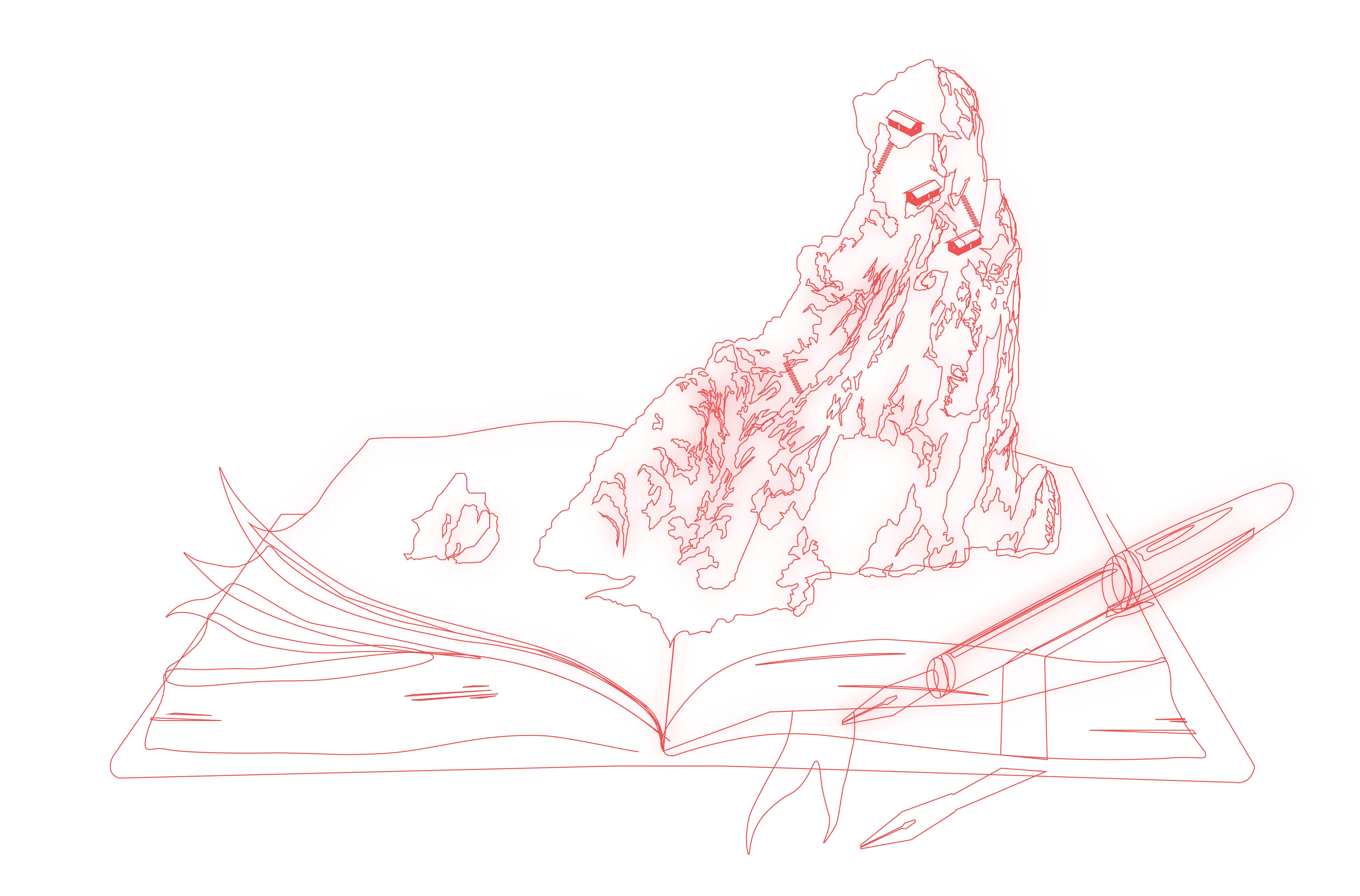
The Climigrant’s Sketchbook Initiative is a resource network designed to empower migrants with the knowledge and skills necessary to adapt to their changing environments. In today's digital society, many knowledges behind craft making and self-sufficiency have been rendered inaccessible as the generational handicraft disappears. By collecting existing resources and original research, the platform offers a diverse range of articles, original diagrams, and interactive tools that cover various topics crucial to adaptation. These resources include but are not limited to:
- Building Techniques: Detailed guides of vernacular architectural typographic research and practical insights into constructing resilient, climate-adaptive structures that take into account local materials, climate variability, and available resources including the implementation of native species in the design solutions. We strongly emphasize the application of physical practices, where collaborators can learn by doing.
- Climate Literacy: Comprehensive information and visualizations that help migrants understand shifting climatic conditions, such as temperature changes, rainfall patterns, and the impact on ecosystems. This knowledge allows them to anticipate and prepare for future challenges.
- Storytelling through Art: A dedicated section for migrants to share their personal experiences, challenges faced, and successful adaptation strategies. This fosters a sense of community and encourages the exchange of valuable knowledge and best practices. As the reach of the CSI grows, so does the network of contributors and available resources.
- Research Database: A curated collection of both original research and external research, such as academic papers, case studies, and practical tools that provide a comprehensive repository for further exploration and learning.
Anthropogenic climate change is remapping our planet. Critical masses, as time passes so do the climates on Earth that are able to comfortably support life - shifting latitudes already excluding upwards of 600 million people from once hospitable landscapes. Experts predict that his number could increase to 6 billion by 2100 (Timothy M. Lenton et al.). Migration induced by anthropocentric climate change implicates more than simply temperature extreme weather events - its impacts are uneven, humanity experiencing food and water scarcity, healthcare inequities, increased mortality rates, lawlessness, and dispossession. On the eve of the sixth-mass extinction, climate induced dispossession is becoming one of the leading causes of houselessness.
According to the estimates of researchers Vermeer and Rahmstorf, by the year 2100 sea levels could rise between 75 and 190 cm. Despite our best climate models, the numbers will not be quantified until they are actually observed. As we glimpse the devastations to come through LCDs, many in the tangible world are already experiencing migration - those with the lowest emissions will be the first to feel the consequences of anthropogenic climate warming. The mass polar migration is underway.
Understanding migration is a multifaceted issue. Displacement not only divorces migrants from physical property, but also from cultures, tradition, and community. Unfamiliar worlds. In 2007, for the first time in recorded human history, more humans lived in urban settlements than in rural ones. Since then, this number has only been on the rise. According to the UN, the number could rise to upwards of 68% by 2050, mostly due to relocation in Asia and Africa. Cities, once modest, will soon become mega metropolises as the global masses turn away from remote farms and flock into the streets. The issue of migration is not restricted to the Global South. By 2050, the countries of Egypt and China will see an estimated 12 million and 73 million from climate refugees alone, respectively. These alarming numbers are only a small fraction of what could be the world’s global total.
To imagine an equitable future for all who are displaced at this critical junction, it is crucial to acknowledge the significance of climate change as a driving force behind this impending crisis. Climigrant’s Sketchbook recognizes the imperative need to provide support and resources to those affected, enabling them to adapt effectively and create sustainable livelihoods.
Vernacular architecture as a thesis for habitation asserts more than an aestheticized view of nature, instead it is an exercise in symbiosis. The implementation of ancestral knowledge is a modern practice that translates weaving and ceramic creation into some of the planet’s most resilient
buildings, built with the same hands. Without electricity and heavy machinery, they use knowledge of the earth to withstand constant flooding and extreme temperatures. While vernacular architecture is not synonymous with sustainable architecture, the two share many commonalities, including their ability to minimize the impacts of climate change through organic carbon storage and the ability to reduce transportation by sourcing materials on-site that are already adapted to climatic variability. Vernacular architecture is an architecture of heritage, passed down through hands and words between generations. It adapts to new challenges, mending them with a knowledge refined over time of both place and ecosystem.
Design Anthropology is an emerging discourse. Here, the goal of this research is to interrogate and formulate these processes into something digestible and deployable for designers working for vulnerable or disenfranchised communities within the humanitarian realm of “design for development.” Current design anthropology - seeks to unpack the existing processes by which designers work, how decisions are made.
“The potential is more socially informed, engaged and sensitive architecture which responds more directly to people’s needs.” In a changing world, Design Anthropology tasks architects to divorce themselves from modernist technocratic models that automate the design and construction processes, adopting alternative models that bypass a reliance on economic or commercial practices. We must push beyond the limitations in order to redefine how anthropology and architectural research are conducted - focusing on creative practice like drawing, dancing, weaving, or crafting pottery.
Understanding how humans can live in symbiosis with nature, especially in one of the most biologically diverse ecosystems on the planet, is pivotal. An architecture of adaptation requires a deep understanding of sociocultural systems in order to assure indigenous tribes not only survive beyond a just transition but thrive. By connecting across disciplines, through the lens of Design Anthropology, might we imagine how understanding vernacular can combat an inevitable climate future. What is often understood as primitive or less than modern, can be recontextualized as innovative and necessary for global progress.